
 Image 1 of 2
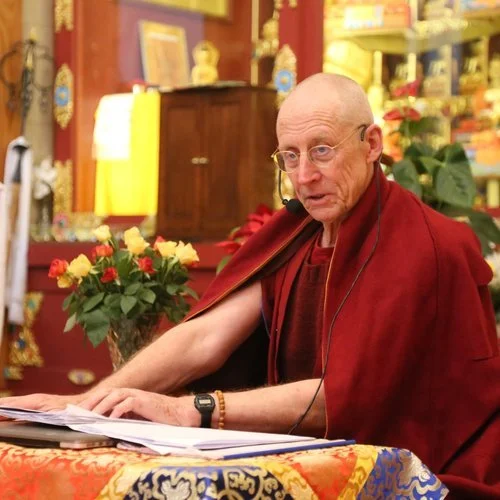 Image 2 of 2
Seeing Things As They Are: The Path To Joy In Buddhism, Retreat with Geshe Losel – 20th, 21st & 22nd Nov 2026
Date: Friday 20th, Saturday 21st & Sunday 22nd November 2026
Time: Arrive Friday evening, closing Sunday afternoon
Format: Residential, Onsite & Online
Overview
Why do we get so caught up in things? Why can one small problem take over our whole day? And why do anxiety, stress or dissatisfaction sometimes remain even when, on the surface, life seems to be going well?
Buddhism suggests that much of our unease comes not simply from what happens to us, but from how we see things. We tend to experience people, situations and even ourselves as fixed, solid and independent. Yet when we look more closely, everything exists through a web of causes, conditions, relationships and changing circumstances.
This weekend with Geshe Tenzin Losel will explore this deeply practical Buddhist insight through the teachings on dependent relativity.
Drawing on his book Dependent Relativity and Je Tsongkhapa’s (1357 - 1419) celebrated Praise for Dependent Relativity, Geshe Losel will introduce one of Buddhism’s most powerful ways of understanding reality: that things are not as real as they appear to be…
This may sound philosophical, but its implications are very down to earth. If things are less solid and permanent than we imagine, then our problems, identities, relationships and emotional reactions can also become much more workable. We can begin to hold life a little more lightly, respond with greater flexibility, and create space between what happens and how we react.
Over the weekend, Geshe Losel will guide us through these ideas with teaching, meditation, reflection and discussion, helping to connect some of Buddhism’s deepest wisdom with the challenges and experiences of ordinary life.
No previous knowledge of Buddhism is required, and the teachings will also be available to join online.
We will explore:
Why Buddhism says our way of seeing things matters so much.
How everything depends upon causes, conditions and relationships.
Why things may be less fixed and solid than they appear.
How our assumptions about ourselves and others create stress.
How a different way of seeing can reduce attachment, frustration and anxiety.
The connection between dependent arising and the Buddhist teaching on emptiness.
How these insights can help us live with more openness, flexibility and compassion.
Schedule
Friday 20th November 2026
Arrive from 5pm
6:30pm–7:30pm – Supper
7:30pm–8:30pm – Welcome & Evening Introduction
Saturday 21st November 2026
8:00am–8:30am – Morning Meditation
8:30am–9:30am – Breakfast
9:30am–10:15am – Teaching & Meditation
10:15am–10:45am – Refresher Break
10:45am–12:30pm – Teaching & Meditation
12:30pm–1:30pm – Lunch & Afternoon Break
1:30pm–2:30pm – Karma Yoga
2:30pm–3:30pm – Afternoon Break
3:30pm–4:45pm – Teaching & Meditation
4:45pm–5:15pm – Refresher Break
5:15pm–6:30pm – Teaching & Meditation
6:30pm–7:30pm – Supper
7:30pm–8:30pm – Teaching / Discussion + Q&A
Sunday 22nd November 2026
8:00am–8:30am – Morning Meditation
8:30am–9:30am – Breakfast
9:30am–10:15am – Teaching & Meditation
10:15am–10:45am – Refresher Break
10:45am–12:30pm – Teaching & Meditation
12:30pm–2:00pm – Lunch & Break
2:00pm–3:30pm – Teaching & Meditation
3:30pm – Course Ends
About the Teacher
Geshe Tenzin Losel was born in mid-20th century Britain. He first met Buddhist teachings in England thanks to the exceptionally kind efforts of Lama Yeshe and Lama Zopa, reaching out to westerners. He left for India in 1990 for further studies and received full ordination as a Buddhist monk in the Tibetan tradition from His Holiness the Dalai Lama in 1994. He is one of the handful of Westerners trained for two decades in the traditional Tibetan way as a geshe. While a student at the Institute of Buddhist Dialectics in Dharamsala, he attended many public teachings by His Holiness there. In 2006 he received his geshe degree from Drepung Loseling, the monastery where the late Geshe Damcho, founder of Lam Rim Wales also trained. After returning to Britain to care for his parents in their last years, he moved in 2018 to Nalanda Monastery in France. As well as teaching, he has been involved in translating vinaya materials, which deal with ethical conduct and vows, especially for monastics. In fulfilment of Geshe Damcho’s request to him to teach in his centres, he is now associated with Lam Rim Wales and Lam Rim Bristol.
Translations
Tsongkhapa's Praise for Dependent Relativity (2011, Wisdom Publications)
A Glowing Light of Scripture and Reasoning, Lamp Illuminating the Essentials of the Four Seals that Authenticate the View by Gen Lamrimpa Ngawang Phuntsok (2019).
A Mirror Making All Things Clear, A Presentation of Signs and Reasonings by Geshe Tsultrim Namgyel (2019).
Who Should Join?
Anyone interested in meditation, religious life, and inner development, Buddhist practitioners of all levels.
Lunch & Refreshments
We are pleased to provide complimentary refreshments throughout the day, lunch and supper. Please advise of any dietary requirements on the booking form.
Tickets & Donation
Everyone is welcome to attend Buddhist teachings freely with no donation. However, the Centre does rely on donations to stay open, which are gratefully received. We offer two main rates to enable as many people as possible to attend our teachings. Please consider paying at the highest rate that you are able. Your generosity is vital in supporting the Centre.
Standard Rate - This includes a donation to help sustain Lam Rim Buddhist Centre, and to cover costs and teacher expenses. Includes accommodation & food.
Basic Rate - This covers the very basic costs of running this course. Includes accommodation & food.
Support Rate - Contact us via lamrimwalesmanagers@gmail.com if the above rates are too high for you where we can discuss further subsidised options.
Date: Friday 20th, Saturday 21st & Sunday 22nd November 2026
Time: Arrive Friday evening, closing Sunday afternoon
Format: Residential, Onsite & Online
Overview
Why do we get so caught up in things? Why can one small problem take over our whole day? And why do anxiety, stress or dissatisfaction sometimes remain even when, on the surface, life seems to be going well?
Buddhism suggests that much of our unease comes not simply from what happens to us, but from how we see things. We tend to experience people, situations and even ourselves as fixed, solid and independent. Yet when we look more closely, everything exists through a web of causes, conditions, relationships and changing circumstances.
This weekend with Geshe Tenzin Losel will explore this deeply practical Buddhist insight through the teachings on dependent relativity.
Drawing on his book Dependent Relativity and Je Tsongkhapa’s (1357 - 1419) celebrated Praise for Dependent Relativity, Geshe Losel will introduce one of Buddhism’s most powerful ways of understanding reality: that things are not as real as they appear to be…
This may sound philosophical, but its implications are very down to earth. If things are less solid and permanent than we imagine, then our problems, identities, relationships and emotional reactions can also become much more workable. We can begin to hold life a little more lightly, respond with greater flexibility, and create space between what happens and how we react.
Over the weekend, Geshe Losel will guide us through these ideas with teaching, meditation, reflection and discussion, helping to connect some of Buddhism’s deepest wisdom with the challenges and experiences of ordinary life.
No previous knowledge of Buddhism is required, and the teachings will also be available to join online.
We will explore:
Why Buddhism says our way of seeing things matters so much.
How everything depends upon causes, conditions and relationships.
Why things may be less fixed and solid than they appear.
How our assumptions about ourselves and others create stress.
How a different way of seeing can reduce attachment, frustration and anxiety.
The connection between dependent arising and the Buddhist teaching on emptiness.
How these insights can help us live with more openness, flexibility and compassion.
Schedule
Friday 20th November 2026
Arrive from 5pm
6:30pm–7:30pm – Supper
7:30pm–8:30pm – Welcome & Evening Introduction
Saturday 21st November 2026
8:00am–8:30am – Morning Meditation
8:30am–9:30am – Breakfast
9:30am–10:15am – Teaching & Meditation
10:15am–10:45am – Refresher Break
10:45am–12:30pm – Teaching & Meditation
12:30pm–1:30pm – Lunch & Afternoon Break
1:30pm–2:30pm – Karma Yoga
2:30pm–3:30pm – Afternoon Break
3:30pm–4:45pm – Teaching & Meditation
4:45pm–5:15pm – Refresher Break
5:15pm–6:30pm – Teaching & Meditation
6:30pm–7:30pm – Supper
7:30pm–8:30pm – Teaching / Discussion + Q&A
Sunday 22nd November 2026
8:00am–8:30am – Morning Meditation
8:30am–9:30am – Breakfast
9:30am–10:15am – Teaching & Meditation
10:15am–10:45am – Refresher Break
10:45am–12:30pm – Teaching & Meditation
12:30pm–2:00pm – Lunch & Break
2:00pm–3:30pm – Teaching & Meditation
3:30pm – Course Ends
About the Teacher
Geshe Tenzin Losel was born in mid-20th century Britain. He first met Buddhist teachings in England thanks to the exceptionally kind efforts of Lama Yeshe and Lama Zopa, reaching out to westerners. He left for India in 1990 for further studies and received full ordination as a Buddhist monk in the Tibetan tradition from His Holiness the Dalai Lama in 1994. He is one of the handful of Westerners trained for two decades in the traditional Tibetan way as a geshe. While a student at the Institute of Buddhist Dialectics in Dharamsala, he attended many public teachings by His Holiness there. In 2006 he received his geshe degree from Drepung Loseling, the monastery where the late Geshe Damcho, founder of Lam Rim Wales also trained. After returning to Britain to care for his parents in their last years, he moved in 2018 to Nalanda Monastery in France. As well as teaching, he has been involved in translating vinaya materials, which deal with ethical conduct and vows, especially for monastics. In fulfilment of Geshe Damcho’s request to him to teach in his centres, he is now associated with Lam Rim Wales and Lam Rim Bristol.
Translations
Tsongkhapa's Praise for Dependent Relativity (2011, Wisdom Publications)
A Glowing Light of Scripture and Reasoning, Lamp Illuminating the Essentials of the Four Seals that Authenticate the View by Gen Lamrimpa Ngawang Phuntsok (2019).
A Mirror Making All Things Clear, A Presentation of Signs and Reasonings by Geshe Tsultrim Namgyel (2019).
Who Should Join?
Anyone interested in meditation, religious life, and inner development, Buddhist practitioners of all levels.
Lunch & Refreshments
We are pleased to provide complimentary refreshments throughout the day, lunch and supper. Please advise of any dietary requirements on the booking form.
Tickets & Donation
Everyone is welcome to attend Buddhist teachings freely with no donation. However, the Centre does rely on donations to stay open, which are gratefully received. We offer two main rates to enable as many people as possible to attend our teachings. Please consider paying at the highest rate that you are able. Your generosity is vital in supporting the Centre.
Standard Rate - This includes a donation to help sustain Lam Rim Buddhist Centre, and to cover costs and teacher expenses. Includes accommodation & food.
Basic Rate - This covers the very basic costs of running this course. Includes accommodation & food.
Support Rate - Contact us via lamrimwalesmanagers@gmail.com if the above rates are too high for you where we can discuss further subsidised options.