
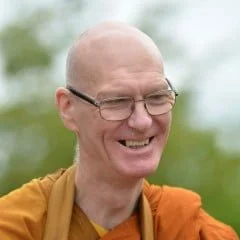
 Image 1 of 2
 Image 2 of 2
Applications of Mindfulness Retreat, with Bhikkhu Dhammanando – 22nd, 23rd & 24th May 2026
Date: Friday 22nd, Saturday 23rd, & Sunday 24th May 2026
Time: Arrive Friday evening, closing Sunday after lunch
Format: Residential, Onsite
Overview
This retreat offers an intensive experience of meditation (sitting, standing, walking) as taught by a second generation disciple of Ajahn Chah, a great meditation master from N.E. Thailand, whose life was the inspiration for over 200 monasteries in Thailand and forty more set up in the West.
Ajahn Chah emphasized the practice of meditation in daily life and the keeping of moral precepts and renunciant training rules (Vinaya) as well as the social and communal aspects of practice (i.e. work and community), all as a practical aid to inner development.
He discouraged devoting too much time to the study of texts, especially as he felt that westerners are, in any case, “addicted to study” and over- dependent on theories they absorb through books. Instead of this it was his belief that the ‘book’ they really needed to study was their own heart.
Nevertheless, reference will be made to the Satipatthana Sutta (Majjhima Nikaya No. 10), once described by the Buddha as the “Direct Path to Realisation” and which, along with the Anapanasati Sutta, is seen as the most comprehensive guide to the practice of meditation in the Theravada Canon. This Sutta advocates the cultivation of mindfulness through the Four Applications of Mindfulness (body, feeling, mind and mental phenomena).
The teaching will emphasize practice over theory, the relevance of mindfulness in everyday life and how it functions as a direct path to insight and wellbeing. Reference will also be made to other key teachings such as the Four Noble Truths and the three characteristics of existence and the vital role they can play in the path to liberation. Participants will be encouraged to see how mindful observation of experience reveals impermanence, reduces reactivity and leads naturally to letting go.
Topics include:
Working skilfully with craving, aversion and mental distraction
Observing arising and passing away as the basis for insight Integrating Satipatthana into everyday life
Guided practice (informed by 30 years of monastic experience)
Schedule
Friday 22nd May 2026
Arrive from 5pm
6:30pm-7:30pm - Supper
7:30pm-8:30pm - Initial Puja, introduction and guided meditation
Saturday 23rd May 2026
7:00am-8:00am - Puja and morning meditation
8:00am-9:00am - Breakfast
9.15am-11:45am - Meditation, sitting and walking (with mini-break)
11:45am-1:30pm - Lunch and Afternoon break
1:30pm-2:30pm - Karma Yoga
2:30am-5:00pm - Meditation and teaching
5:00pm-7:00pm - Rest & Supper
7:00pm-8:30pm - Puja, meditation, talk and Q&A
Sunday 24th May 2026
7:00am-8:00am - Puja and morning meditation
8:00am-9:00am - Breakfast
9.15am-11:45am - Meditation, sitting and walking (with mini-break)
11:45am-1:30pm - Lunch and Afternoon break
1:30pm-3:30pm - Teaching and meditation
3:30pm - Course Ends
About the Teacher
Bhikkhu Dhammanando was born and raised in London in a family largely uninterested in religion and sceptical of spiritual matters. He did not initially regard himself as a spiritual seeker. In his twenties, however, a two-year period as a volunteer English teacher in Thailand brought him into sustained contact with Buddhist culture and society. Although his understanding of Buddhism was at that time limited, the experience left a lasting impression, particularly through observing the generosity, resilience, and everyday ease of those around him.
Some years later, while working in London as a language and communications trainer, he encountered the Thai Forest Tradition through meeting Ajahn Sumedho and other Western monks, first in London and subsequently at Chithurst Monastery. Attending a ten-day meditation retreat proved decisive, revealing the relevance and practicality of the Buddha’s teachings for his own life. He subsequently undertook monastic training as an anagārika at Amaravati and Chithurst, before returning briefly to lay life to teach and pursue further academic study. Four years later, having set aside those ambitions, he returned to the Sangha and received full bhikkhu ordination (upasampadā) with Ajahn Sumedho in 1993.
Since ordination, Bhikkhu Dhammanando has trained and lived for over thirty years as a Theravāda monk, residing in monasteries throughout the UK and spending extended periods in Switzerland, Italy, Australia, and New Zealand. In recent years he has been based primarily at Amaravati Monastery, where he has been actively involved in receiving and hosting educational groups and in some community outreach, specifically teaching in a local prison. He has also taught regularly in Buddhist centres in both Ireland and Hungary. His teaching is practice-centred, based on everyday experience, which is the norm in monasteries set up under the guidance of Ajahn Chah and his western disciples, where teaching makes reference to the original texts but is not constrained by them.”
Who Should Join?
Anyone interested in meditation, religious life, and inner development, Buddhist practitioners of all levels.
Lunch & Refreshments
We are pleased to provide complimentary refreshments throughout the day and a two course vegetarian lunch included in your booking. Please advise of any dietary requirements on the booking form.
Tickets & Donation
Everyone is welcome to attend Buddhist teachings freely with no donation. However, the Centre does rely on donations to stay open, which are gratefully received. We offer two main rates to enable as many people as possible to attend our teachings. Please consider paying at the highest rate that you are able. Your generosity is vital in supporting the Centre.
Standard Rate - This includes a donation to help sustain Lam Rim Buddhist Centre, and to cover costs and teacher expenses.
Basic Rate - This covers the very basic costs of running this course.
Support Rate - Contact us via lamrimwalesmanagers@gmail.com if the above rates are too high for you where we can discuss further subsidised options.
Donate Onsite - If you prefer to donate cash or use card onsite, please select this ticket option and complete the booking form register. Only choose this option if you are certain you can attend.
Donate via BACS - If you prefer to donate via BACS, please select this ticket option and complete the booking form register. Then follow the instructions for BACS donation >
Important on Booking: Our online system uses PayPal to take donations. If you do not have a PayPal Account you can pay as a Guest. Please click the link ‘Try Another Way’ , then follow instructions for ‘Pay by Debit or Credit Card’.
Date: Friday 22nd, Saturday 23rd, & Sunday 24th May 2026
Time: Arrive Friday evening, closing Sunday after lunch
Format: Residential, Onsite
Overview
This retreat offers an intensive experience of meditation (sitting, standing, walking) as taught by a second generation disciple of Ajahn Chah, a great meditation master from N.E. Thailand, whose life was the inspiration for over 200 monasteries in Thailand and forty more set up in the West.
Ajahn Chah emphasized the practice of meditation in daily life and the keeping of moral precepts and renunciant training rules (Vinaya) as well as the social and communal aspects of practice (i.e. work and community), all as a practical aid to inner development.
He discouraged devoting too much time to the study of texts, especially as he felt that westerners are, in any case, “addicted to study” and over- dependent on theories they absorb through books. Instead of this it was his belief that the ‘book’ they really needed to study was their own heart.
Nevertheless, reference will be made to the Satipatthana Sutta (Majjhima Nikaya No. 10), once described by the Buddha as the “Direct Path to Realisation” and which, along with the Anapanasati Sutta, is seen as the most comprehensive guide to the practice of meditation in the Theravada Canon. This Sutta advocates the cultivation of mindfulness through the Four Applications of Mindfulness (body, feeling, mind and mental phenomena).
The teaching will emphasize practice over theory, the relevance of mindfulness in everyday life and how it functions as a direct path to insight and wellbeing. Reference will also be made to other key teachings such as the Four Noble Truths and the three characteristics of existence and the vital role they can play in the path to liberation. Participants will be encouraged to see how mindful observation of experience reveals impermanence, reduces reactivity and leads naturally to letting go.
Topics include:
Working skilfully with craving, aversion and mental distraction
Observing arising and passing away as the basis for insight Integrating Satipatthana into everyday life
Guided practice (informed by 30 years of monastic experience)
Schedule
Friday 22nd May 2026
Arrive from 5pm
6:30pm-7:30pm - Supper
7:30pm-8:30pm - Initial Puja, introduction and guided meditation
Saturday 23rd May 2026
7:00am-8:00am - Puja and morning meditation
8:00am-9:00am - Breakfast
9.15am-11:45am - Meditation, sitting and walking (with mini-break)
11:45am-1:30pm - Lunch and Afternoon break
1:30pm-2:30pm - Karma Yoga
2:30am-5:00pm - Meditation and teaching
5:00pm-7:00pm - Rest & Supper
7:00pm-8:30pm - Puja, meditation, talk and Q&A
Sunday 24th May 2026
7:00am-8:00am - Puja and morning meditation
8:00am-9:00am - Breakfast
9.15am-11:45am - Meditation, sitting and walking (with mini-break)
11:45am-1:30pm - Lunch and Afternoon break
1:30pm-3:30pm - Teaching and meditation
3:30pm - Course Ends
About the Teacher
Bhikkhu Dhammanando was born and raised in London in a family largely uninterested in religion and sceptical of spiritual matters. He did not initially regard himself as a spiritual seeker. In his twenties, however, a two-year period as a volunteer English teacher in Thailand brought him into sustained contact with Buddhist culture and society. Although his understanding of Buddhism was at that time limited, the experience left a lasting impression, particularly through observing the generosity, resilience, and everyday ease of those around him.
Some years later, while working in London as a language and communications trainer, he encountered the Thai Forest Tradition through meeting Ajahn Sumedho and other Western monks, first in London and subsequently at Chithurst Monastery. Attending a ten-day meditation retreat proved decisive, revealing the relevance and practicality of the Buddha’s teachings for his own life. He subsequently undertook monastic training as an anagārika at Amaravati and Chithurst, before returning briefly to lay life to teach and pursue further academic study. Four years later, having set aside those ambitions, he returned to the Sangha and received full bhikkhu ordination (upasampadā) with Ajahn Sumedho in 1993.
Since ordination, Bhikkhu Dhammanando has trained and lived for over thirty years as a Theravāda monk, residing in monasteries throughout the UK and spending extended periods in Switzerland, Italy, Australia, and New Zealand. In recent years he has been based primarily at Amaravati Monastery, where he has been actively involved in receiving and hosting educational groups and in some community outreach, specifically teaching in a local prison. He has also taught regularly in Buddhist centres in both Ireland and Hungary. His teaching is practice-centred, based on everyday experience, which is the norm in monasteries set up under the guidance of Ajahn Chah and his western disciples, where teaching makes reference to the original texts but is not constrained by them.”
Who Should Join?
Anyone interested in meditation, religious life, and inner development, Buddhist practitioners of all levels.
Lunch & Refreshments
We are pleased to provide complimentary refreshments throughout the day and a two course vegetarian lunch included in your booking. Please advise of any dietary requirements on the booking form.
Tickets & Donation
Everyone is welcome to attend Buddhist teachings freely with no donation. However, the Centre does rely on donations to stay open, which are gratefully received. We offer two main rates to enable as many people as possible to attend our teachings. Please consider paying at the highest rate that you are able. Your generosity is vital in supporting the Centre.
Standard Rate - This includes a donation to help sustain Lam Rim Buddhist Centre, and to cover costs and teacher expenses.
Basic Rate - This covers the very basic costs of running this course.
Support Rate - Contact us via lamrimwalesmanagers@gmail.com if the above rates are too high for you where we can discuss further subsidised options.
Donate Onsite - If you prefer to donate cash or use card onsite, please select this ticket option and complete the booking form register. Only choose this option if you are certain you can attend.
Donate via BACS - If you prefer to donate via BACS, please select this ticket option and complete the booking form register. Then follow the instructions for BACS donation >
Important on Booking: Our online system uses PayPal to take donations. If you do not have a PayPal Account you can pay as a Guest. Please click the link ‘Try Another Way’ , then follow instructions for ‘Pay by Debit or Credit Card’.